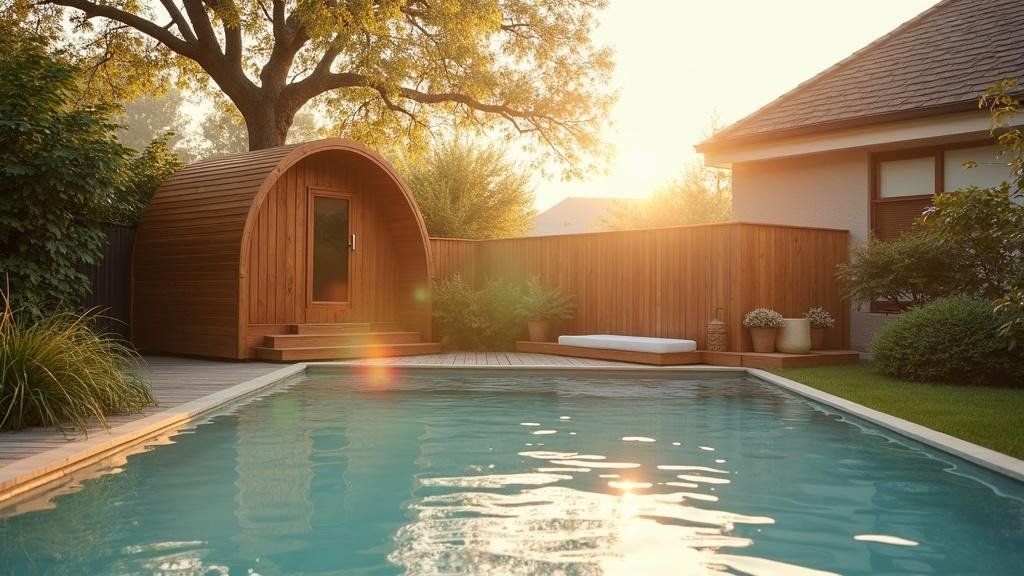

Most people spend weeks obsessing over infrared vs traditional sauna specs and zero time thinking about who installs the thing or fixes it when something goes wrong. That oversight costs them. A $6,000 barrel sauna sitting unassembled in a driveway is not a wellness investment. It is a very expensive puzzle
Here are ten options, ranked by overall value to a real buyer, mixing both sauna types and the cold plunge pairings that increasingly go with them.
For outside context, see this iccsafe.org.
1. Sweat Decks
The reason Sweat Decks leads this list has nothing to do with a single product. It is the only retailer here that treats design, delivery, and post-purchase service as part of the actual offering rather than a footnote. Their team shows up, installs the equipment, and can come back to inspect, repair, or replace it. That matters when you are bolting a wood-burning heater to an outdoor deck or wiring a full-spectrum infrared cabin into a garage.
They carry barrel saunas, cube saunas, indoor and outdoor builds, electric and wood-burning heaters, steam equipment, cold plunges, outdoor showers, and a long list of accessories. So they can match a product to a specific yard, budget, or room rather than steering everyone toward one SKU. Local installation crews operate in Austin, Los Angeles, and Houston. Vetted contractors handle the rest of the country. A price-match guarantee removes the usual “maybe I can find this cheaper elsewhere” anxiety.
If you are buying a sauna to actually use for years, not to assemble once and abandon, this is the starting point.
Best for: Anyone who wants a complete setup, not just a product shipped to their door.
Honest caveat: Their breadth means you need to know roughly what you want before the consultation, or the options get overwhelming fast.
See also: 10 Infrared vs Traditional Sauna Setups Worth Actually Spending Money On
2. Sunlighten
Sunlighten has been in the infrared space long enough to have a real track record. Their saunas use a three-wavelength approach covering near, mid, and far infrared, and the company has been transparent about EMF and ELF levels in a way that budget infrared brands often are not. Pricing runs premium.
Pro: Well-documented wavelength technology, long company history.
Con: High price floor, and the warranty support experience varies by region.
3. Sun Home Saunas
Sun Home makes both infrared saunas and cold plunge chillers. Their Cold Plunge Pro reaches approximately 32 degrees Fahrenheit and runs in the $9,000 to $14,500 range depending on configuration. Their Luminar line is a full-spectrum infrared sauna. Fortune and Forbes have covered them. The products are serious.
Pro: One of the few brands doing both infrared and chiller-based cold plunge at a high spec level.
Con: Expensive, and the price point means a mistake in sizing or placement is costly.
4. Clearlight
Clearlight builds infrared saunas with a focus on low-EMF claims and solid cedar construction. They have been around long enough that used units still hold value, which says something about build quality. Models range from one-person cabins to larger family sizes.
Pro: Low-EMF focus, good resale value, genuine cedar.
Con: Premium pricing, and the product line is infrared only, so traditional sauna fans need to look elsewhere.
5. Plunge (Sauna + Cold Plunge)
Plunge built its reputation on the All-In cold plunge chiller, priced between roughly $4,990 and $5,990. They have since added the Plunge Sauna Mini, a cedar cabin around $10,000. Buying both from one company simplifies the pairing.
Pro: Chiller-based cold plunge means consistent temperature without hauling ice. The cold-to-heat-to-cold cycle is actually sustainable as a habit.
Con: The sauna Mini is priced at the high end for its size. Installation is not included.
6. Almost Heaven
Almost Heaven makes outdoor cedar barrel saunas that start around $4,999. Barrel design is traditional. It heats up well in cold climates, looks good in a backyard, and the wood construction is legitimate. This is the honest value pick for a traditional sauna experience.
Pro: Real cedar, real heat, accessible price for what you get.
Con: Assembly is on you. Electric heater standard; wood-burning adds cost and permitting complexity depending on your area.
7. HigherDOSE
HigherDOSE leans hard into design and lifestyle. Their infrared saunas and blankets are genuinely good-looking and the brand has a strong social presence. The sauna blanket runs well under $1,000 and is a practical entry point for infrared without committing to a cabinet.
Pro: Infrared blanket is low-commitment and genuinely portable. Full saunas look sharp.
Con: The lifestyle branding sometimes outpaces the technical specs. Not the choice for someone who wants granular EMF data.
8. Dynamic Saunas
Dynamic makes budget infrared saunas. Prices are low. Construction is basic. For someone who wants to try infrared without spending Sunlighten money, this is where people start.
Pro: Lowest barrier to entry for an actual infrared cabinet.
Con: Build quality is entry-level. Long-term durability is a known trade-off at this price.
9. Ice Barrel
Ice Barrel sells a molded barrel designed for ice-based cold immersion. Price runs $1,150 to $1,500. No chiller, no electricity, no compressor. You add ice. It works.
Pro: Cheapest real cold plunge on this list. Durable shape, easy to move.
Con: Ice cost adds up fast. Temperature is inconsistent compared to a chiller unit. Not the choice for daily year-round use without commitment to buying ice regularly.
10. nurecover
nurecover makes portable cold therapy products, including foldable plunge tubs. Think of it as the absolute floor of the cold plunge category. Price is minimal.
Pro: Genuinely affordable starting point for cold exposure habits.
Con: Thin walls mean temperature drops fast in warm climates. No chiller means the same ice-management problem as Ice Barrel, in a less durable package.
The Infrared vs Traditional Short Answer
Infrared runs cooler (usually 120 to 150 degrees Fahrenheit) and heats your body directly rather than heating the air first. Session times tend to run longer. Traditional Finnish-style saunas run 170 to 200 degrees or higher, with humidity from water on rocks. The experience is sharper, more intense. Neither is medically superior. They are different. Your tolerance for heat, your space, and your installation situation should decide the choice, not marketing.
Chiller-based cold plunges hold temperature automatically. Ice-based options are cheaper upfront and meaningfully more annoying to maintain. If the habit is the goal, the chiller wins long-term.
Common Questions
Does the lower temperature in an infrared sauna actually make it feel easier to sit through a longer session?
Yes, in practice. Infrared units running 120 to 150 degrees Fahrenheit feel far less punishing than a traditional sauna at 185 degrees, so most people tolerate 30 to 45 minute sessions without much difficulty. Whether longer, cooler sessions produce the same physiological effect as shorter, hotter ones is still an open research question.
If I buy from Sweat Decks instead of directly from a brand like Sunlighten or Clearlight, do I lose any warranty coverage?
Sweat Decks operates as a retailer carrying multiple brands, so manufacturer warranties generally travel with the product. The practical difference is that Sweat Decks handles the installation and post-purchase service layer, which neither Sunlighten nor Clearlight includes as standard. For anything warranty-specific, confirming terms in writing before purchase is worth doing.
Is the Plunge All-In chiller worth the $4,990 to $5,990 price over an Ice Barrel at $1,150 to $1,500?
For daily use, yes, the math changes fast. Ice for a single session can run $5 to $15 depending on your area. The chiller pays for the convenience gap inside two years of consistent use, and temperature stays dialed in automatically. If you use cold plunging two or three times a week year-round, the chiller is the less annoying long-term choice.
Almost Heaven saunas start around $4,999, which is close to the Plunge Sauna Mini at roughly $10,000. What actually explains that price gap?
Almost Heaven is a traditional barrel sauna you assemble yourself, heated electrically, with no installation support. The Plunge Sauna Mini is a finished cedar cabin positioned as a premium product with brand-supported pairing to their cold plunge ecosystem. You are partly paying for the bundle convenience, the brand positioning, and the build finish, not just raw materials or heat output.
How much does it matter which infrared wavelength a sauna uses, and do brands like Sunlighten or HigherDOSE actually differ meaningfully on this?
Sunlighten publishes specific near, mid, and far infrared output data and third-party EMF testing. HigherDOSE focuses more on design and accessibility and is less detailed on wavelength breakdowns in its public materials. Whether near versus far infrared produces different outcomes for a given person is genuinely unsettled science. If the technical specs matter to you, Sunlighten gives you more to evaluate.
Sources
- Sun Home Saunas product pages and Cold Plunge Pro specifications (public, 2024)
- Plunge.com product listings for All-In and Plunge Sauna Mini
- Almost Heaven Saunas retail pricing, publicly listed
- Ice Barrel retail pricing, public
- Sunlighten and Clearlight brand sites, infrared wavelength and EMF disclosures
- HigherDOSE product listings and sauna blanket pricing
- Dynamic Saunas retail listings across major home goods retailers
- nurecover product pages, portable cold tub specifications
